RETRAI
Loading

RETRAI Workshop

Requirement Engineering for Trustworthy Artificial Intelligence

Panels — RETRAI 2026

Roundtable Q&A with audience Interdisciplinary

RETRAI 2026 hosts two panels, each bringing together industry experts and researchers from a wide variety of fields — philosophy, sociology, speech and language pathology, neuropsychology and software engineering. Both sessions close with an open question-and-answer exchange with the audience. See the program for where they sit in the day.

Panel 1 — The Benefits, Limitations and Risks of AI for Humanity and Society

Portrait of Mehdi Mirakhorli

Professor Mehdi Mirakhorli

University of Hawaiʻi at Mānoa, USA

Mehdi Mirakhorli is a Professor of Computer Science at the University of Hawaiʻi at Mānoa and the Founding Director of the Mānoa Indo-Pacific Cybersecurity Institute. His research focuses on trustworthy autonomous AI, offensive cybersecurity, software and systems engineering, and human-AI teaming in high-consequence environments. He has led projects of national importance for the U.S. Department of Homeland Security, the Cybersecurity and Infrastructure Security Agency, the Defense Advanced Research Projects Agency, the U.S. Air Force, the Office of Naval Research, the U.S. Department of Transportation, and the National Institutes of Health.

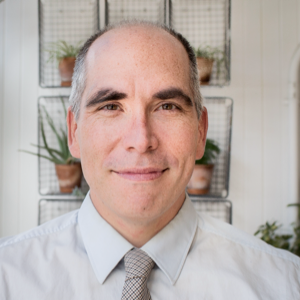
Portrait of Lionel Briand

Professor Lionel Briand

University of Ottawa, Canada · Lero, University of Limerick, Ireland

Lionel C. Briand is a professor of software engineering and holds shared appointments at (1) The University of Ottawa, Canada, and (2) The Lero Centre—the Research Ireland center for software research—hosted by the University of Limerick. In collaboration with colleagues over the past 30 years, he has led numerous collaborative research projects with companies in the automotive, satellite, aerospace, energy, financial, and legal sectors. Lionel has held various engineering, academic, and leadership positions across seven countries. He holds a Distinguished Research Chair (Trustworthy AI-enabled Software Systems) and is the director of Lero.

Lionel Briand was elevated to the ranks of IEEE Fellow and ACM Fellow for his contributions to software testing and verification. He received the IEEE Computer Society Harlan Mills Award, the ACM SIGSOFT Outstanding Research Award, and the IEEE Reliability Society Engineer of the Year Award in 2012, 2022, and 2013, respectively. Additionally, he was awarded an ERC Advanced Grant in 2016 for modeling and testing cyber-physical systems—the most prestigious individual research award in the European Union—and was elected a fellow of the Academy of Science, Royal Society of Canada, in 2023, Academia Europaea—the European Academy of Science, in 2025, and the inaugural ACM SIGSOFT Software Engineering Academy, in 2026. His research interests include trustworthy AI, software testing and verification (including security aspects), applications of AI in software engineering, and requirements engineering.

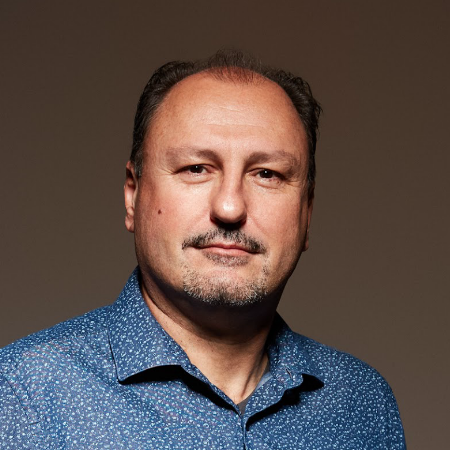
Portrait of Kurt Schneider

Professor Kurt Schneider

Leibniz Universität Hannover, Germany

Kurt Schneider studied computer science in Erlangen and received a PhD in software engineering from Stuttgart University. He held a PostDoc position at the Center for LifeLong Learning and Design at the University of Colorado at Boulder, USA. In 1996, he joined the Daimler Research Center in Ulm as a researcher and manager. Since 2003, Kurt Schneider is a full professor of software engineering at Leibniz Universität Hannover, Germany. He specializes in the intersection of humans with technology, such as requirements engineering, software quality – and human values.

Panel 2 — The Benefits, Limitations and Risks of AI for Vulnerable Users

Portrait of Jocelyn Maclure

Professor Jocelyn Maclure

McGill University, Canada

Jocelyn Maclure is full professor of philosophy and Jarislowsky Chair in Human Nature and Technology at McGill University. His current work spans across speculative and practical questions paused by progress in AI research and development. His recent publications appeared in journals such as Minds & Machines, AI & Ethics, AI & Society and Digital Society. As a public philosopher, he chaired the Ethics in Science and Technology Commission of the Quebec Government from 2017 to 2024, and contributed to initiatives such as the Montreal Declaration for the Responsible Development of AI and the UNESCO AI Ethics Recommendation. In 2023, he was Mercator Visiting Professor for AI in the Human Context at the University of Bonn.

Portrait of Cimon Chapdelaine

Cimon Chapdelaine

Clinique MultiSens & Phonia, Canada

Cimon Chapdelaine, Speech and Language Pathologist and Entrepreneur, is cofounder and general manager of Clinique MultiSens, a rehabilitation clinic specialized in hearing, communication, and cognitive health services, and Phonia’s cofounder and general manager, a digital health startup helping Speech and Language Pathologists with the burden of tedious analytic tasks using its unique and specialized automatic speech recognition system. Cimon cumulates 15 years as an entrepreneur and clinician-scientist, a Master degree in Speech and Language Pathology, a Degree in Public Health/Healthcare and social services management and a Degree in Organizational Development. During the last 6 years, Cimon tackled Speech and Language services access problematic through the scope of innovation.

Portrait of Annie Desmarais

Dr Annie Desmarais

Université de Montréal & IVADO, Canada

Annie Desmarais is a licensed neuropsychologist and postdoctoral researcher specializing in the integration of AI in mental health and neuropsychological assessment. She holds a Ph.D. in clinical neuropsychology from Université Laval in Canada, conducted in collaboration with the Université de Liège in Belgium, and completed postdoctoral fellowships at the Université de Montréal under the supervision of leading experts in neuropsychology. She is a postdoctoral researcher at the Université de Montréal in collaboration with the IVADO Center of Excellence in AI in Canada, where she develops AI-based solutions for precision and personalized psychiatry. Through her ongoing research initiatives and collaborative endeavors with both academic institutions and industry partners, Dr. Desmarais continues to advance the understanding of how artificial intelligence can be harnessed to improve diagnostic accuracy, treatment outcomes, and overall patient care in neuropsychological practice.

Portrait of Camille Normandin

Camille Normandin

Université de Montréal & CRIUGM, Canada

Camille Normandin is a PhD candidate in sociology at the Université de Montréal, co-supervised by Céline Lafontaine and Dr. Thomas Tannou. She is also a research associate at the Centre de recherche de l’Institut universitaire de gériatrie de Montréal (CRIUGM), within the EncorAge lab. Her research sits at the intersection of science and technology studies (STS) and the ethics of care, focusing on how gerontechnologies reshape care ecosystems, practices, and living environments. She critically examines issues of surveillance and privacy, as well as the discursive and political constructions of autonomy, responsibility, and aging in place. More broadly, her work explores the sociotechnical imaginaries and the promissory economy underpinning innovation in the field of aging and technology.

Moderator

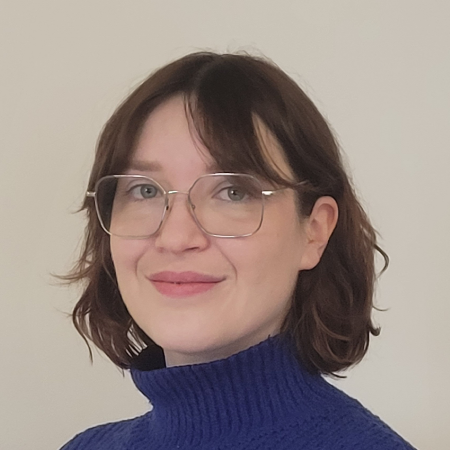
Portrait of Isobel Standen

Isobel Standen

Philosophy department, University of York, UK

Isobel Standen is a third-year PhD student in the Department of Philosophy and a researcher from the Centre for Assuring Autonomy. Her work is at the intersection of philosophy and computer science, where she is involved in projects that bring together multidisciplinary researchers for collaboration. Isobel’s research explores human understanding and decision making, specifically human ‘common sense’, and how the lack of this capacity may be one of the leading causes of errors made by AI systems.

Previous editions

RETRAI 2025 panel

The 2025 panel “Defining Trustworthiness for Intelligent Agents” and its panelists remain available on the RETRAI 2025 site. See also the History page.